
A recent study by scientists indicates that the Hindu Kush-Himalaya region is experiencing increased frequency and intensity of extreme weather events due to climate change, including rapid glacial melting and changing rainfall patterns. However, the research also cautions against solely blaming climate change, highlighting that human factors like population growth, commercial activities, and non-enforcement of regulations contribute significantly to the vulnerability and impact of these disasters. The study points out that many devastating floods originate from small glaciers and rain-fed streams, exacerbated by encroachment on unstable slopes and floodplains.

A World Cup game between Paraguay and France in Philadelphia is at risk due to extreme heat and humidity, linked to climate change and fossil fuel use. A heat dome over the U.S. and Canada has pushed temperatures beyond safe play recommendations, raising concerns about player safety and future tournament scheduling.

Climate experts explain how El Nino and climate change are intricately linked, with El Nino delaying monsoon onset and climate change intensifying rainfall. This new reality is altering the Indian monsoon's behaviour, leading to short-duration, high-intensity rain spells, especially in western and northwestern regions.

Nepal's devastating flash floods have claimed 1,127 lives, with thousands still missing a week after the disaster. Rescuers are intensifying efforts to find survivors and recover bodies across affected regions, while police work to identify victims and relocate families from high-risk areas.

'People told me to go back to school and leave climate issues to adults. But if adults had done their job, I wouldn't be here protesting.' At just 14, climate activist Licypriya Kangujam says children are paying the price for a crisis they did not create, while governments continue to make promises without delivering meaningful change.

Window for fast marathons closing because of climate change, report finds
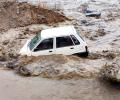
The head of the UN's climate science panel, Jim Skea, has expressed concern over the accelerating pace of climate impacts, saying scientists have been surprised by the speed of temperature rise. Skea attributed the worsening situation to inaction on climate change and highlighted the need for urgent action to reduce greenhouse gas emissions. He also addressed concerns about the scientific messaging and the perception of imposed climate policies, emphasizing the importance of involving societies and people in climate change action.

A new study by the Leibniz Institute for Food Systems Biology reveals that higher atmospheric carbon dioxide levels significantly alter the protein composition of wheat. This change impacts baking quality and the tolerability of wheat products, with increased amylase/trypsin-inhibitors and decreased gluten proteins observed under elevated CO2 conditions. Researchers emphasise the need for crop adaptation focusing on quality characteristics.

Frequent weather shocks caused by climate change pose challenges for the monetary policy as well as downside risks to economic growth, a Reserve Bank report said. Global average temperatures are on a rise, with accompanying increase in extreme weather events (EWE), and the economic and social impact of global warming is becoming increasingly evident, said RBI's Monetary Policy Report - April 2024. The report said that climate change has increased the frequency and ferocity of weather shocks, posing challenges for monetary policy.

A recent study by IIT Kharagpur researchers reveals that powerful cyclones can significantly impact groundwater quality up to 100 metres below the surface in deep coastal aquifers. Conducted in the climate-vulnerable Sundarbans region, the research highlights how extreme weather events disturb the freshwater-seawater balance, threatening drinking water security and necessitating depth-specific groundwater management strategies.

India's Agriculture Secretary Atish Chandra has warned that the upcoming rabi (winter) crop season is likely to be challenging for rainfed areas due to the strengthening El Nio weather pattern, potentially affecting foodgrain production. This comes as Maharashtra declares drought in nearly 74 per cent of its talukas, highlighting the immediate impact of climate change.
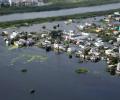
'We need to value lives and also put a value on our lives.'
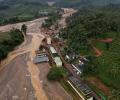
The deadly landslides in Kerala's ecologically fragile Wayanad district were triggered by a heavy burst of rainfall, made 10 per cent heavier by climate change, according to a new rapid attribution study by a global team of scientists.

Researchers have outlined five crucial actions to help the world prepare for a potentially strongest-on-record El Nino, aiming to reduce its severe health consequences like infectious diseases, malnutrition, and heat-related conditions. These recommendations, published in The Lancet, emphasise a comprehensive risk overview and early preparatory measures.

Nepal has launched a diplomatic initiative to secure climate-related compensation from major greenhouse gas emitters, asserting that post-disaster assistance for recent deadly flash floods should be viewed as a moral and legal liability, not charity. Foreign Minister Shisir Khanal highlighted Nepal's disproportionate suffering from global warming despite negligible emissions, citing rapid glacier melt and extreme mountain disasters. The country has formally approached the Loss and Damage Fund board for urgent financial aid following a catastrophic flash flood in the Bhotekoshi river basin.

A preliminary government report reveals that devastating flash floods in Nepal have affected over 32,000 people, caused 1,295 deaths, and severely damaged infrastructure including roads, bridges, schools, and healthcare facilities. Senior Nepali Congress leader Arjun Narsing KC has criticised the government's coordination of rescue and relief operations and called for international action on climate justice.

Small and marginal farmers practising agriculture on rain-fed farms will bear the brunt of climate change

A new study reveals that past emissions from major oil, gas, coal, and cement producers will continue to impact Earth's environment for centuries, even if emissions cease today. The research highlights that the planet will remain significantly warmer than pre-industrial levels, leading to persistent climate damages and increasing the likelihood of future extreme weather events, forming the basis for accountability lawsuits against these "carbon majors."

India should encourage the second coming of SAARC with climate change as an urgent agenda and keeping Indian security concerns in mind as the subtext, suggest Lieutenant General Ashok Joshi (retd) and Colonel Anil Athale (retd).

'If learning to read changed our brain in a good way and we gained remarkable knowledge that we shared with each other then, by the same logic, won't lack of reading also change our brain? Won't it reduce the valuable knowledge we acquire and share with each other,' asks reading coach Reeta Ramamurthy Gupta on National Reading Day.

Following devastating flash floods in Nepal, experts are calling for systematic scientific assessments of glaciers to understand and mitigate hazards, alongside the development of a robust land use policy for the Himalayan region. The floods, which killed over 460 people and left thousands missing, are believed to be linked to climate change impacts on glaciers and permafrost.
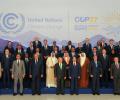
The overwhelming feeling at the end of COP 27 was that despite decades of meetings and landmark accords, like the Paris Agreement, the world was still not doing enough to slow the climate crisis, observes Ambassador T P Sreenivasan.

'The trigger for the flood was definitely natural, but the damage that it caused was human-made.'

A scientist from the Wadia Institute of Himalayan Geology highlights how climate change, including glacial retreat, shifting precipitation patterns, and rising nighttime temperatures, is exacerbating the risk of flash floods and landslides in the Himalayas, as seen in recent disasters in Nepal and Uttarakhand.
With climate change impacts worsening and affecting the poor and most vulnerable, governments urgently need to scale up adaptation
'When there is a change in the wind speed or the stress exerted on the surface, it will change the ocean currents.'

'Glaciers are melting all across the region.'

The Ministry of External Affairs reported that 275 Indians remain missing following devastating flash floods along the Nepal-Tibet border, while 166 others have been rescued. India has supplied 95 tonnes of relief material and deployed 54 personnel, including rescue and forensic experts, to assist Nepal. The death toll in Nepal has reached 1,295, with thousands still missing, and significant infrastructure damage reported. India has also highlighted the need for developed countries to lead in climate change action.
A report by the University of Chicago's Energy Policy Institute projects approximately 15,800 additional heat-related deaths in India over the next six months due to the 'super El Nino' phenomenon. Globally, nearly 451,000 additional deaths are anticipated. Experts in India emphasize the need for swift action, including implementing Heat Action Plans and focusing on vulnerable populations, while also urging caution regarding model-based projections.

'Nearly two-thirds of Maharashtra has been drought-prone on and off, and climate change is making it worse.'
A report authored by UN's panel of scientists from across the world on climate change and sent to the governments of 197 countries has ominous news on the climate change front.

TeamLease EdTech Founder and CEO Shantanu Rooj states that the AI-driven world transition is irreversible, with regulation and cost being crucial factors determining its speed and depth. He emphasizes that while AI will transform jobs, not eliminate them, continuous learning, domain expertise, and adaptability will be key for individuals and businesses to thrive in this evolving landscape. Rooj also highlights the need for universities to adapt their curricula to prepare a future-ready workforce.

Climate change has hampered the ability of the forecasting agencies to accurately predict severe events and weather bureaus across the world are focusing on augmenting the observational network density and the weather prediction modelling to improve predictability, India Meteorological Department (IMD) Director General Mrutyunjay Mohapatra has said.

The White House Press Secretary said the impacts of climate change on weather are severe.

India lost around 38.5 thousand hectares of tropical forest in the last decade. Nearly 14 per cent of the country's tree cover! It is one thing for Modi to announce that India will reach a net-zero level of emissions in 2070. But if it is serious, it needs to start today, points out Ramesh Menon.

The transmission of dengue is closely associated with three key factors -- rainfall, humidity and temperature -- that dictate the geographies in which it spreads and the transmission rate of the viral infection caused by the dengue virus (DENV), and transmitted to humans through the bite of infected mosquitoes.
A new study by IIT Kharagpur researchers, published in Nature Communications, reveals that urban growth patterns significantly influence future cooling demand in cities. The research highlights that a city's "thermal memory," shaped by decades of development decisions, impacts its heat burden and energy requirements, independent of global temperature rises. The study analysed 88 Indian cities and a global sample of 52 cities over two decades.
A new study indicates that accounting for daily weather variability provides a more accurate estimation of glacier melt, suggesting that glaciers worldwide are losing ice at a faster rate than previously calculated. Researchers found that simulations incorporating daily weather patterns project greater ice loss by the end of the century and a higher contribution to global sea-level rise.

'There needs to be a monitoring of glaciers in high altitude areas and one needs to check regularly how geological changes are taking place.' 'We can mitigate that by regular monitoring but unfortunately, hardly any monitoring is happening.' 'And without monitoring those higher altitudes of Himalayas, people are suffering.'
Climate change will make monsoons unpredictable; as a result, rain-fed wheat cultivation in South Asia will suffer in a big way and the total cereal production will go down.
